
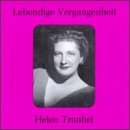
Cheap Lebendige Vergangenheit: Helen Traubel (Music) (Christoph Willibald Gluck, Richard Strauss, Richard Wagner, Artur Rodzinski, Charles O'Connell, Ernst Knoch, Leopold Stokowski, Metropolitan Opera Orchestra, Philadelphia Orchestra, Philharmonic Symphony Orchestra) Price
CHEAP-PRICE.NET ’s Cheap Price
$17.98
Here at Cheap-price.net we have Lebendige Vergangenheit: Helen Traubel at a terrific price. The real-time price may actually be cheaper — click “Buy Now” above to check the live price at Amazon.com.
| ARTIST: | Christoph Willibald Gluck, Richard Strauss, Richard Wagner, Artur Rodzinski, Charles O'Connell, Ernst Knoch, Leopold Stokowski, Metropolitan Opera Orchestra, Philadelphia Orchestra, Philharmonic Symphony Orchestra |
| CATEGORY: | Music |
| MANUFACTURER: | Preiser Records |
| TYPE: | Vocal Music, German/Austrian Romantic Opera, Miscellaneous Music, Romantic Music for Voice and Keyboard, Classical, Opera, Solo Voice(s) and Orchestra, Vocal, German/Austrian Classical Period Opera |
| MEDIA: | Audio CD |
| TRACKS: | Alceste: Divinites Du Styx, Tannhauser: Dich, Teure Halle, Lohengrin: Einsam In Truben Tagen, Lohengrin: Das Susse Lied Verhallt, Tristan Und Isolde: Erfuhrest Du Meine Schmach, Tristan Und Isolde: Mild Und Leise, Die Walkure: Du Bist Der Lenz, Die Walkure: Hojotoho!, Die Walkure: Fort Denn Eile, Im Treibhaus, Schmerzen, Traume, Zueignung |
| # OF MEDIA: | 1 |
| UPC: | 717281891202 |
Related Products
Customer Reviews of Lebendige Vergangenheit: Helen Traubel
 FABULOUS!!! But wait!!
 I agree with the previous reviewer about so much and therefore as they have been well stated, I will NOT repeat those observations! However, I must comment for the readers and buyers on a fews things: this idea of "maybe Lubin" among the greatest, and also that Anny Konetzni, Marta Fuchs mean nothing, including in my own words "maybe Grob-Prandl." Lastly I will comment on how Traubel would be received today. <
> <
>First of all, Germaine Lubin! If anyone sang heroic Wagner beautifully and efficiently, it was Lubin. Her voice was as full as anybodys, even if it lacked the depth of Traubel, Flagstad, or Konetzni. Yet neither of them had her powerful gleaming High C, nor her feminine allure and sex appeal (which was apparently only on the surface) - She was really in THE superb class of Wagnerians. Because she did not appear at the MET does not make her "maybe." <
> <
>Anny Konetzni is just about the most berated singer of all time, yet her tone bears a definite similarity to the beloved Milanov. Therefore, it does not surprise that both Anny Konetzni and Zinka Milanov studied with Jacques Stuckgold for a period of time - near the same time. She had an unmatched bouyancy, superb high notes (she lacked the top C), and had tremendous power. In fact, in terms of sheer strength, many of the heldentenore of the time suggest that hers was the most powerful. I am sure Nilsson and Prandl were louder. I am sure Flagstad was deeper. I am sure Fuchs and Leider were more dramatically intense. I am sure Traubel, who came closest to Konetzni in terms of sheer muscle power was more focussed of tone. Most of all, Konetzni's timbre was extremely seductive. She RULED the Vienna State Opera as THE hochdramatisch sopran and she was legendary for her jealousy of all threats. At the MET apparently her face was too round and her vibrato too wide. NEXT!!! <
> <
>Marta Fuchs' voice was HUGE and open and she leaves an imprint of finality in Gotterdammerung that has and must place her in top ranks. <
> <
>Grob-Prandl's voice alone and determination set her apart in spite of the fact that she was never placed at the top worldwide. <
> <
>Finally, please help me. If Traubel were singing today, they would not know what to do with her. She would be the St. Louis giant among hobbits. She would be too fat, too matronly (I hate that phrase, I do mean hate because it undermines greatness), too much chest voice, nothing above a G, too hard, too this, too that etc... Anyway, why would they need her when they have all those georgeous German voices today, thick, rich, round, ringing (I hope you know I am kidding). <
> <
>The thin layer that started to generically embrace everybody in this global politically correct world is beginning to come undone. Of course, my dear, we accept all and hate no one! We love All of YOU. They forgot to add this phrase...... " oh yes, as long as you fit within these strict unbending guidelines" What people really love about the operatic past is its individuality and diversity. The opera world is like paint thinner, but I digress, because in the words of a very famous man who told me this personally: "Well, we've got Renee."
The Lost Art of the Heroic Wagnerian Soprano
Helen Traubel (1899-1972) was one of the very few great heroic Wagnerian sopranos of the twentieth century, a true Isolde/Brunnhilde voice. In fact, to show how rare a breed this is, the United States has produced only three in its history, and two of them (Nordica and Fremstad) were singing a hundred years ago; Traubel was the third. Worldwide, there have been only four or five great heroic Wagnerian sopranos since 1920: Leider (German), Flagstad (Norwegian), Traubel (American), Nilsson (Swedish), and perhaps Lubin (French). These voices don't grow on trees. Nilsson was the only one in the second half of the twentieth century, and today we have none.
Traubel was a big, deep-chested woman with a huge voice; soprano voices don't get any bigger. Her heyday was the 1940s, and her career was almost entirely at the Metropolitan, where she sang from 1937 to 1953, almost exclusively Wagnerian roles. Her career was to some extent a victim of both her own rather peculiar lack of "push" or ambition (she got a late start--she was a perfectionist who prolonged her vocal studies for more than ten years--and almost had to be dragged reluctantly into a major operatic career), and the fact that she was unfortunately, and rather unfairly, always in the shadow of Flagstad, with the result that she was undervalued in her own time and for a long while thereafter.
When Flagstad retired to Norway in 1941 to hole up there for the duration of World War II (not returning to the Met until 1950), Traubel became by default the Met's reigning Wagnerian soprano. She was a refreshingly unpretentious "Saint Louis gal" of German descent who, along with her colleague and frequent partner, the great heroic tenor Lauritz Melchior, could and did poke fun at the pompous world of grand opera. She liked singing popular music and appearing on TV and in movies and even (heaven forbid!) in nightclubs, these low-brow predilections leading to her rupture with autocratic Met general manager Rudolph Bing and her departure from the Met in 1953. A voice like hers should have been a natural for the famed Wagner Festspielhaus at Bayreuth, and would have made her welcome in the great European opera houses, but she had virtually no international career and never sang opera in Europe. She was always oddly ambivalent about her own career. She made relatively few operatic studio recordings, but those she made are very fine, and the surviving Met broadcasts of Wagner operas she sang with Melchior reveal her stature as a major singer.
The Metropolitan Opera Encyclopedia (ed. David Hamilton) says of her: "The finest American Wagnerian soprano of her generation, imposing in both physical and vocal presence, Traubel possessed a massive and clarion voice with a warm timbre. Her principal effect was of majestic poise, but, as her recordings reveal, she was also capable of expressive coloring." This is, I believe, a fair and discerning summary assessment. Her 1941 broadcast of Brunnhilde's Immolation Scene with Toscanini, one of the best ever recorded, is a representative example of her art: noble, expressive, and moving singing, but also disciplined, controlled, and secure--a majestic voice and delivery. Her voice was warmer than Flagstad's or Nilsson's, but yielded nothing to them in power. There is something uniquely thrilling about hearing a voice of this caliber open up and soar out over, or ride the waves of, the rich Wagner orchestration. Vocal historian J. B. Steane aptly describes her voice as "a bright-edged sword" and praises her singing for "a rare kind of excellence." Vocal historian William Youngren notes: "Traubel sang throughout her Met career with almost perfect evenness and control over her whole range, and her characterizations were of rare quality: beautifully sung, intelligently responsive to the text at every turn, riveting in their intensity and truth."
The CD under review here, released in 1996, collects studio recordings (no broadcast material), all made in 1940 (RCA Victor) and 1945 (Columbia) and representing Traubel in her prime. The processing and notes are first-rate, as is typical of the estimable Austrian label Preiser, which with its fine "Lebendige Vergangenheit" ("Living Past") series has done much to preserve and make available recordings of great singers of the past. The program here, thirteen selections, is generous (72:46) and well chosen. It begins with Gluck's classical aria from Alceste, continues with eleven Wagner selections, and ends with Richard Strauss's lied "Zueignung." The lion's share is appropriately Wagner, and two of the eleven Wagner selections are extended ones. Four of her Wagner roles are represented: Elisabeth, Elsa, Isolde, and the Walkure Brunnhilde, as well as three of the five Wesendonck lieder. Interestingly, four of the 1945 Columbia recordings heard here were never issued as 78's, although hearing them now it's certainly hard to understand why (there is a minor glitch in the exciting and very taxing Brunnhilde's Battle Cry, which though very brief calls for two high C's, two trills, and no less than eight difficult upward "flicks" of the voice that must be precisely pitched). The singing is of a consistently high standard, and the only fault I could find is that some purists may object to the full-voiced, grand scale on which the four lieder are sung: they are all with lush orchestral accompaniment, and while powerfully done, they are certainly not intimate or subtle.
There is no voice like this to be heard in the opera houses of today, and were Traubel singing now she would immediately be hailed as head and shoulders above any other Wagnerian soprano in the world. This is a voice, and a CD, to cherish.