
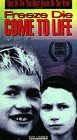
Cheap Freeze Die Come to Life (Video) (Vitali Kanevsky) Price
CHEAP-PRICE.NET ’s Cheap Price
Here at Cheap-price.net we have Freeze Die Come to Life at a terrific price. The real-time price may actually be cheaper — click “Buy Now” above to check the live price at Amazon.com.
| CATEGORY: | Video |
| DIRECTOR: | Vitali Kanevsky |
| THEATRICAL RELEASE DATE: | 1991 |
| MANUFACTURER: | Fox Lorber |
| MPAA RATING: | NR (Not Rated) |
| FEATURES: | Black & White, Color, NTSC |
| TYPE: | Foreign Film - Russian, Foreign Film [Dub Or Subtitle], Movie |
| MEDIA: | VHS Tape |
| # OF MEDIA: | 1 |
| UPC: | 720917010359 |
Related Products
Customer Reviews of Freeze Die Come to Life
 haunting, strangely beautiful, and unforgettable
 I must say that I am Russian, have lived in the States for the last several years, and I love art cinema. I first became aware of this Russian film and sought it out a few months ago, when I read an article in a magazine. It mentioned this film as a seminal Soviet film of the late 80's, which achieved a certain cult status with the cinema connoisseurs in Europe after it had been shown at the 1990 Cannes Film Festival. Then I remembered that I had heard the name of the movie years ago - it is quite catchy in Russian, and it is the name of a childrens' game.
A person who is familiar with Soviet history will easily identify the time period shown - right after the WW2 - you can see the portraits of Stalin everywhere; Japanese POWs; young men maimed in war; young women who will never become wives and mothers simply because so many men had perished in war; abject poverty - bread is strictly rationed because everything was sacrificed for the war.
The little town shown - in the Far East, near the Pacific ocean, not far from China and Japan - is essentially a group of ugly barracks, built around a mining labor camp for criminals.I guess most of the people in town work either as guards, or do some kind of low level supervision of camp laborers, but they live separately from them, of course. Escapes from the camp by convicted murderers happen from time to time, so everyone in town lives in this constant fear. The town dwellers behave like an uncontrollable mob, exploding in anger at every possibility.
The story centers around two children about 8-9 years old: a boy, all to himself and largely ignored by his young mother who has too much on her mind(she tries to support herself and her son by sleeping with a man who helps her with money), and a girl from a stable family (it's mostly hinted at and never really shown). The girl and the boy are neighbours and school-mates, and there is a complex dynamic between them - the boy acts very macho but is still very innocent, and the girl is a lot more mature. At her age she is aware of nuances in human relationships and has a certain natural wisdom. Her relationship to the boy is almost maternal: even though he treats her like a jerk in the first part of the movie, she can see the pain and extreme vulnerability that he hides underneath all his bravado, and something in him attracts her.
There is nothing sexual at all between them, even though they become unwillingly exposed to the things in life that no child should see. They are children in a brutal world that they didn't choose for themselves, having their joys and sorrows.
The boy gets in trouble with the law largely because he has no parent figure in his life. He runs away from home to a big city and gets involved with a tough crowd - which leads to a tragic end.
That doesn't seem like much, but the story and the visuals touch a raw nerve.
The children actors are amazing - they are complete human beings, and there is a zero cuteness factor about them (so unlike mainstream Holliwood). I saw the grown-up actress Dinara Drukarova (who played the girl) in a recent Russian movie "Of freaks and men". (it is a very interesting film, and she is amazing in it).
When I started watching "Freeze-Die-Come to Life", I was taken aback at first by the misery shown, but in the second half of the film its stark, mesmerizing beauty started growing on me. The film is shot in black and white, and the camera work is superb. There is a cerain cinema verite feel in its mass scenes. Many things are just hinded at, but become apparent as the film goes on. It's challenging, but that's what I like about it.
Unfortunately, it seems like this movie has never found a significant audience in Russia. It's so brutally honest and uncompromising, that it must be hard to swallow for most people.
 hmmm
hmmm
I rented this movie having no idea what it was about, i needed to get three movies and just grabbed this one. I love foreign movies, and thought it would be interesting to see a Russian one. I wasn't sure what to make of it at first, it seemed to be good, I liked that it was in black and white. However I didn't feel there was enough plot, or that enough was being told. The ending made be rethink the whole movie, which I thought was great. It was quite interesting to see a movie so different than what's out today.
"...Stark, mournful and clear..."
Pavel Nazarov's "Freeze Die Come to Life" is a tremendous film with a clear and unwavering vision. It is delivered with all of the stark realism you'd expect from post-Soviet experimental Russian cinema. To be sure, this is an art film. Western audiences accustomed to bloated Spielbergesque productions and connect-the-dot plot lines will not find much to like in Nazarov's work.
Set against a brutal and bleak geographic backdrop (Siberia), the film's main characters Valerka and Galiya serve as intense splashes of desperate color throughout the film. Valerka, especially, stands as the archetype of wide-eyed youth and innocence - a condition slowly drowned in places like Vladivostok. Through circumstance, Valerka and Galiya find themselves associating with thieves and con men, stumbling through one experience after the other unaware of the dangerous path they have taken. The ending is tragic, unexpected and delivered with brutal resignation.
Visually the film is crisp and sharp. Nazarov's use of black and white film is used to great emotive effect.
"Freeze Die Come to Life" remains my favorite Russian film. Despite the seemingly stark and vicious series of events the film portrays, it stands as a testament to the underlying goodness and strength inherent in youth, no matter how fleeting that moment is.