
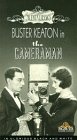
Cheap Cameraman (Silent) (Video) (Buster Keaton) (Buster Keaton) Price
CHEAP-PRICE.NET ’s Cheap Price
Here at Cheap-price.net we have Cameraman (Silent) at a terrific price. The real-time price may actually be cheaper — click “Buy Now” above to check the live price at Amazon.com.
| ACTORS: | Buster Keaton |
| CATEGORY: | Video |
| DIRECTOR: | Buster Keaton |
| THEATRICAL RELEASE DATE: | 22 September, 1928 |
| MANUFACTURER: | Warner Home Video |
| MPAA RATING: | Unrated |
| FEATURES: | Black & White, NTSC |
| TYPE: | Comedies, Movie, Silent Films |
| MEDIA: | VHS Tape |
| UPC: | 027616215932 |
Related Products
Customer Reviews of Cameraman (Silent)
 Marvelous silent comedy
 <
>Buster Keaton near the end of his great period (he had foolishly given up artistic control of his pictures by this time), but this is still a top-notch movie. He plays a tin-type portrait artist who becomes smitten with a girl who works as a secretary at a newsreel company; in order to be by her he buys a movie camera and tries to become a newsreel cameraman. Some of the classic comic secenes (always with Keaton in deadpan mode) include him at a swimming pool, playing baseball with himself in an empty Yankee Stadium, and being in the middle of a Tong war in Chinatown. Perhaps the funniest scene of all is at the end when he unwittingly becomes part of the Lindbergh ticker-tape parade and he thinks the crowd is cheering him. Keaton's balletic humorous touches are on full display, and it's a wonderful comedy. The man was a comedic genius, and this movie is a gem.
The elegance of the simplicity!
The unerring Buster Keaton made one of his most reminded pictures with a fine and delicious humor sense, brimming with invention and original twist of fate but loaded of profound humanity and joy of living. His funny innovations do not hide at all his profound devotion to the cinema and the multiplicity of uses you can give it.
<
>
<
>To me there is not a wide space between his craftsmanship and Charles Chaplin. Perhaps, Keaton was not so satirical and ambitious as Charlot but his only presence and his ever serious face was by itself an invitation for the easy laugh. And it does not sound exaggerate to affirm that due his ever looser style he influenced and inspired two undeniable and future filmmakers of this genre: Jerry Lewis and Woody Allen.
<
>
<
>
One of the best films ever made (like many of the other bests, also a silent film).
Movie magic: Does this term have any significance to you? No doubt, it does, because you're here reading up a bit on Buster Keaton; one of a score of now legendary performers whose work (collectively speaking) was responsible for putting the "magic" in movies. No doubt, many folks go to the cinema to kill time, see what others are talking about, or simply to be entertained. All power to such I say, but films' attraction and longevity has another element as well. And even if it was done only last year, it often bears the fingerprints of the likes of John Ford, Frank Capra, Charlie Chaplin, D.W. Griffith, Alfred Hitchcock, Harold lloyd, Buster Keaton, and so on. I'm not saying all film is terrible today in comparison, mind you. (The case could even be made, I suppose, that just as many quality films are made annually now as were in the 1930s---the heyday of great filmmaking, just that now most of these are art house gems who suffer from the lack of wide exposure. Remember that in the 1920-30s folks went to the movies a lot more often than people do now---it's a fact; look it up if you like. Hence we have a few blockbusters anually now instead of a slew of popular films that were widely seen.) But, what I am saying is that many films from the 1920-30s were absolute treasures; films that really conveyed emotion, that reminded folks---whether they needed it or not---what a joy life can be sometimes. Watching "The Cameraman," I couldn't help but thinking how neat Buster Keaton & Co. clarified this. In the film Buster is doing what he can to make ends meet when he chances on a captivating woman (played fabulously by Marceline Day). But they get separated before he can give her the tintype photo he has taken of her. So he goes-a-looking for her. She's flattered. He expresses interest in the world of her job, a film news agency; thinking maybe he could do something like that, but gets short shrift from the higher-ups there. Then she begins to advise him a bit. It's the old notion of there's a good woman behind every successful man. And it's played out with such simple grace and whimsy in this film that you cannot not like this film. It's an emotive, human, gem. Buster Keaton didn't smile in his films; didn't laugh; didn't cry; wasn't outwardly expressive facially, but nevertheless was wonderfully transparent. You know exactly what he is thinking, how he is feeling at all times. They called him "stoneface," but that's not as contradictory as it sounds. Our true feeling, after all, are more often than not conveyed by mere subtleties. Keaton, Chaplin, & Lillian Gish, I'd offer, were masters of this; in effect, conveying 5 pages of dialogue for each silent scene they acted through. See "Sherlock Jr.," "City Lights"/"The Kid"/"The Gold Rush" & "Way Down East" in addition to "The Cameraman." P.S. If you have never seen a silent film (or have seen few) check out my Amazon guide on this subject; accessible by clicking on my name, thence to my "So You'd Like to" guides. Cheers!